


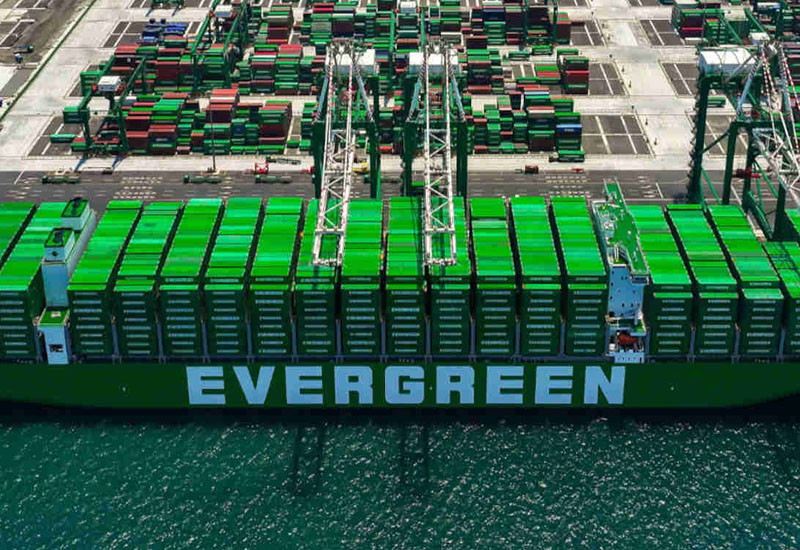

The US Court of Appeals for the DC Circuit has upheld a Federal Maritime Commission (FMC) determination that detention fees charged to a trucker by ocean carrier Evergreen Shipping Agency (America) Corp. during a three-day port closure were unreasonable.
The appeals court unanimously denied all aspects of Evergreen’s petition challenging the FMC’s order, affirming that detention and demurrage fees must promote freight fluidity.
Further content is only available for registered users.
The case, filed at FMC Docket No. 1966(I), concerned detention fees issued to a trucker for the late return of a shipping container and chassis over three days, after a port closed for a holiday weekend and the trucker had no practical way to return the equipment before the closure.
In its order, the Commission applied its Interpretive Rule on Detention and Demurrage to conclude that Evergreen’s fees violated the Shipping Act’s requirement that ocean carriers apply “just and reasonable” practices when handling property, under 46 U.S.C. § 41102(c).
The D.C. Circuit fully endorsed the Commission’s application of the Interpretive Rule, which assesses whether demurrage and detention fees are serving their intended purpose as financial incentives to promote freight fluidity, per 46 C.F.R. § 545.5(c).
The Commission found that the fees did not incentivise fluidity, since evidence showed the trucker could not retrieve the equipment from the cargo owner before the port closed, meaning the fees charged during the closure could not have encouraged an earlier return.
The court affirmed that the FMC can draw on its expertise to balance competing incentives when assessing whether detention and demurrage fees support efficient equipment flow through the supply chain.
The Commission’s order also found that none of Evergreen’s explanations justified the fees under the circumstances of the case. It further ruled that the fees could not be treated as reasonable compensation for Evergreen’s additional costs, given the carrier provided insufficient evidence of those costs.
The D.C. Circuit affirmed that the burden rests with carriers to provide evidence in adjudications showing how their fees serve a compensatory purpose.