


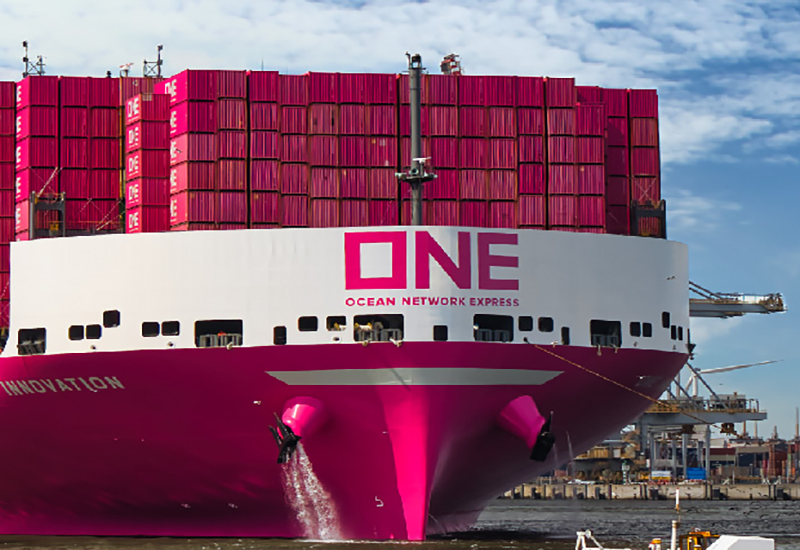

Ocean Network Express (ONE) has brought in mandatory high-security container seal requirements across its international network.
The new policy is cited to strengthen cargo security and support compliance across ports, container terminals and the wider supply chain.
Further content is only available for registered users.
Effective immediately, all containers tendered for international transport with ONE, or moved under the carrier’s custody, must be fitted with high-security seals that meet or exceed the ISO 17712:2013 standard.
The updated requirements are designed to strengthen cargo integrity while supporting compliance with international supply chain security programmes, including the Customs-Trade Partnership Against Terrorism (C-TPAT), Authorised Economic Operator (AEO) and World Customs Organization (WCO) frameworks.
For ports and terminal operators, the use of standardised high-security seals can help reduce delays associated with customs inspections, improve cargo traceability and minimise the risk of container tampering throughout the terminal handling process.
While ONE said it will continue to process containers arriving with non-compliant seals to avoid operational disruption, responsibility for fitting compliant seals remains with shippers and cargo owners.
The carrier added that it will not be liable for cargo shortages, damage or related claims resulting from the use of substandard or non-compliant seals.
Any fines, penalties or additional costs imposed by customs or government authorities due to missing or non-compliant seals will also remain the customer’s responsibility under the terms of the ONE Bill of Lading.
To support consistent handling practices across port facilities and inland logistics operations, ONE recommends fitting seals in the designated “Securacam” position at the bottom of the left locking bar on the container’s right-hand door.
The carrier further recommended that cargo owners maintain adequate insurance cover to protect against unforeseen transit risks.