


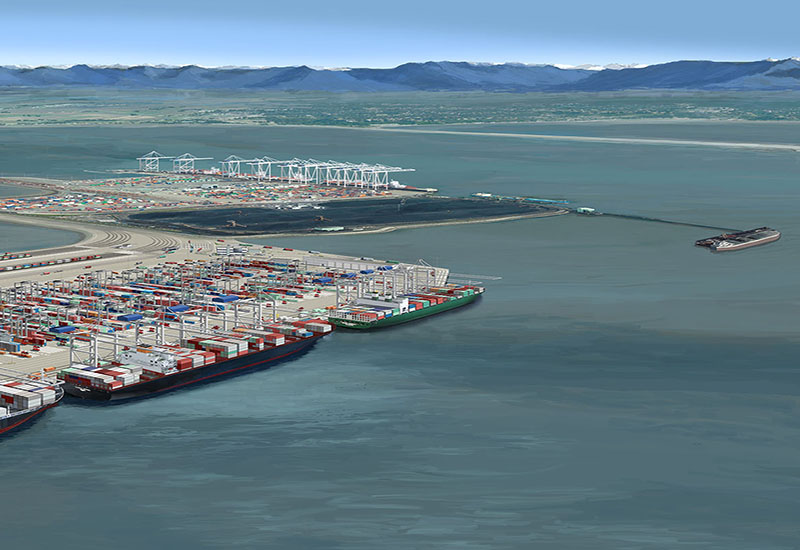

The Vancouver Fraser Port Authority has selected TerraMarine as the preferred proponent for the landmass and wharf component of the Roberts Bank Terminal 2 Project, marking an important milestone in delivering a nation-building project that directly supports Prime Minister Mark Carney’s goal of doubling Canadian exports to non-US markets over the next decade. The project will support a more resilient and reliable supply chain, and help move more of what Canadians make, mine, harvest, and grow to more customers around the world.
Further content is only available for registered users.
Roberts Bank Terminal 2 is a future marine container terminal at the Port of Vancouver that will increase container capacity on Canada’s west coast by more than 30%, unlocking more than $100 billion in annual trade capacity, contributing over $3 billion annually to Canada’s GDP, and supporting tens of thousands of jobs.
The selection follows a competitive procurement process, with TerraMarine identified as the preferred proponent, subject to finalisation of contraction negotiations with the port authority.
The TerraMarine team has extensive experience in collaboratively delivering major marine infrastructure projects and demonstrated expertise in health and safety, regulatory compliance, project management, environmental protection, and community engagement. It is comprised of:
- FlatironDragados Canada, Inc.
- Van Oord Canada Ltd.
- Aecon Constructors, a division of Aecon Construction Group Inc.
- Carlson Construction Group Inc.
- Supported by design firm Arcadis Professional Services Canada Inc. and sub-consultants Stantec Consulting Ltd., TYPSA Inc., and Tetra Tech Canada Inc.
The construction contract involves the delivery of a marine landmass; wharf structure and berth pocket; widened causeway; expanded tug basin; and select environmental mitigation and offsetting projects.
As part of a competitive selection process for the landmass and wharf component of the project, the port authority selected a progressive design-build procurement with a target price model, which allows for greater flexibility in the design process, strengthens collaboration, and enhances cost and schedule certainty.
A request for qualifications was issued in July 2025. Interested construction teams submitted their qualifications, and, in November 2025, three teams were shortlisted and invited to submit a proposal. The proposals were received in late May 2026 and the project team conducted a comprehensive assessment of the proposals. An independent fairness monitor oversaw the process to ensure the procurement and evaluation was fair, open, and transparent.
TerraMarine will now work with the port authority, First Nations, and regulators to advance construction planning, including logistics, work planning, costs, schedule, early works and sub-contracting opportunities, including for Indigenous-owned businesses.
Once initial work has sufficiently advanced and following financial close, the port authority intends to award a target price design-build agreement to TerraMarine. Financial close, construction mobilisation, and early works are set to occur in late 2027, with construction (land reclamation) starting in 2028. Terminal operations are expected to begin in the mid-2030s.
Today’s announcement builds on other key milestones. Roberts Bank Terminal 2 has secured key environmental approvals and has the consent from 27 First Nations, with whom the port authority has mutual benefits agreements in place. Additionally, the port authority and Global Container Terminals, a majority Canadian-owned operator at the Port of Vancouver, have entered into a memorandum of understanding to explore partnership to advance Roberts Bank Terminal 2 with the goal of achieving a joint operating and development agreement.
The project builds on the port authority’s experience of delivering complex infrastructure projects, including the completed Centerm Expansion Project, which significantly increased container terminal capacity at the Port of Vancouver. Other projects underway to strengthen trade capacity across the gateway are Second Narrows dredging works to allow ships to load more fully with product and the Holdom Overpass Project to improve rail service to North Shore terminals.