


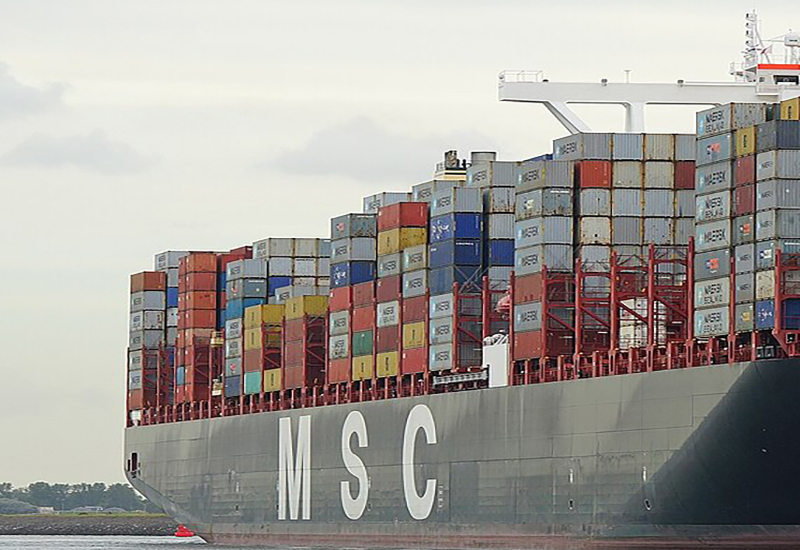

MSC Mediterranean Shipping Company has unveiled a new Europe-Red Sea-Middle East Express service, targeting growing demand on the corridor and ongoing disruption across the Middle East. The service is set to strengthen connectivity between European gateways and Red Sea ports, with onward links to Gulf markets via multimodal solutions.
Further content is only available for registered users.
The rotation will connect key North and South European hubs directly with King Abdullah Port, Jeddah, and Aqaba, offering additional access to the UAE and Upper Gulf through feeder and inland transport networks.
For ports and terminals, the service adds capacity on a trade lane under pressure, while supporting more stable cargo flows.
The first sailing is scheduled from Antwerp on 10 May (Voyage OC619 A). The eastbound rotation will call at Gdansk, Klaipeda, Bremerhaven, Antwerp, Valencia, Barcelona, Gioia Tauro, Abu Kir, King Abdullah, Jeddah and Aqaba.
The carrier said the service is structured to deliver improved transit times and operational reliability, supporting a range of cargo types.
The inclusion of major transhipment hubs such as Gioia Tauro and Valencia is expected to enhance network flexibility and cargo distribution across the region.
In addition, MSC will utilise truck and feeder connections via Saudi Arabia to extend reach into Gulf markets, providing an integrated solution beyond core port calls.
The launch reflects a broader shift among carriers to adapt network configurations in response to geopolitical risk and changing trade dynamics in the Middle East.
For terminals along the rotation, the service is likely to drive incremental volumes and reinforce the strategic role of Red Sea hubs as connectivity points between Europe and Gulf markets.
MSC added that the service will be supported by its wider European network, enabling cargo from North West Continent, Scandinavia, the Baltic, West Mediterranean, Adriatic, East Mediterranean and Black Sea regions to feed into the corridor.
Overall, the new loop strengthens east–west connectivity at a time of heightened uncertainty, while offering ports and logistics operators additional routing options and supply chain resilience.