


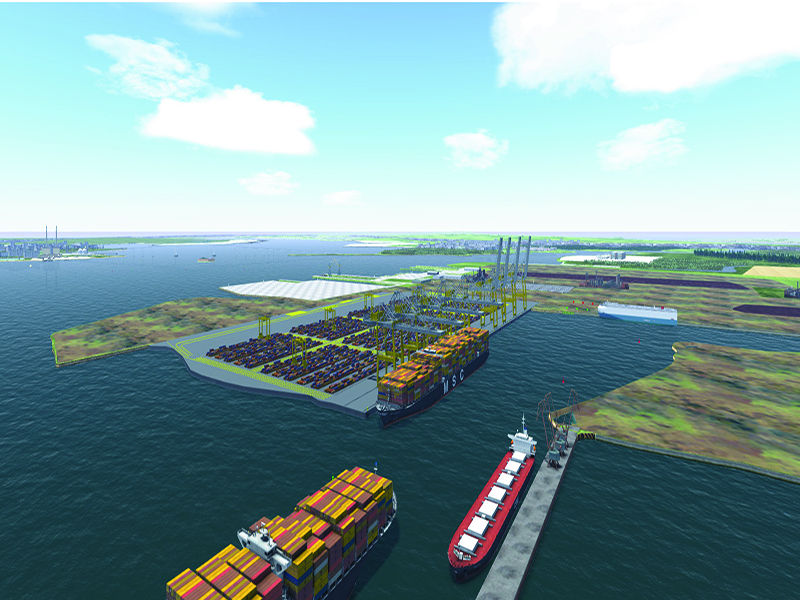

The US Army Corps of Engineers (USACE), Baltimore District recently issued its Section 404/10/408/103 permit decision for the Sparrows Point Container Terminal (SPCT) project, a joint venture between Tradepoint Atlantic and Terminal Investments Limited, to construct a new container terminal and associated facilities at the Port of Baltimore.
Further content is only available for registered users.
The proposed project, which will be located on 330 acres within the existing Tradepoint Atlantic industrial development site in Baltimore County, required authorisation from the Secretary of the Army, acting through USACE, under Section 404 of the Clean Water Act (33 U.S.C. 1344) for the discharge of dredged or fill material into waters of the United States; Section 10 of the Rivers and Harbors Act of 1899 (33 U.S.C. 403) for the construction of any structure in or over navigable waters of the United States; Section 408 of the Rivers and Harbors Act of 1899 (33 USC 408) for taking possession of, use of, or injury to harbor or river improvements; and Section 103 of the Marine Protection, Research and Sanctuaries Act (33 USC 1413) for ocean disposal of dredged material.
USACE was the lead agency under the National Environmental Policy Act (NEPA) for the environmental review and permitting process at the SPCT site through FAST-41, a legislatively-established process for improving federal agency coordination and timeliness of environmental reviews for infrastructure projects.
“Permit issuance for the Sparrows Point Container Terminal Project highlights how FAST-41 and integration of the USACE Regulatory process can streamline environmental reviews, resulting in improved efficiency and clarity within the federal permitting process,” said Baltimore District Commander Col. Francis Pera. “All stakeholders held a steadfast commitment to collaboration, accountability and transparency, which ultimately led to identification of a project alternative with the least impact to aquatic resources, all while meeting the applicant’s project timeline.”
The permit authorises construction of an approximate 3,000 linear foot marine terminal consisting of a marginal wharf with ship-to-shore cranes, a container yard, gate complex, intermodal/rail yard, and various support structures which also includes upland excavation, a revetment and associated outfalls.
For vessel access to the wharf, the project will include deepening and widening of the existing Sparrows Point Channel and turning basin to -52 feet mean lower low water, requiring mechanical dredging and placement of approximately 4.2 million cubic yards of dredged material to be transported to approved locations. The channel entrance will continue to connect to the Brewerton Federal Navigation Channel.
As part of its review, USACE prepared a Final Environmental Impact Statement (EIS) to assess the potential social, economic, and environmental impacts of the proposed project and to contribute information to allow them to make a permit decision with respect to the permit application. The Final EIS addressed comments on the Draft EIS and included analysis and disclosure of the potential impacts of the SPCT project and reasonable alternatives on the natural and human environment.
“The FAST-41 collaborative process prioritised active communication, analysing alternatives, and addressing public and agency comments,” said Baltimore District Regulatory Project Manager Maria Teresi. “We were able to minimise aquatic impacts, including the avoidance of 100 acres of fill in the tidal Patapsco River.”
The SPCT is the next major phase of redevelopment of the former Sparrows Point Steel Mill, an effort initiated in 2014 by Tradepoint Atlantic meant to enhance the economic strength of the port by increasing its overall container capacity. It would include an on-dock rail facility, which, in conjunction with the Howard Street Tunnel Vertical Clearance Improvement Project, would increase the throughput of containers through the port, providing a foundation for sustained economic growth, enhanced supply chain efficiency and resiliency throughout the region.