


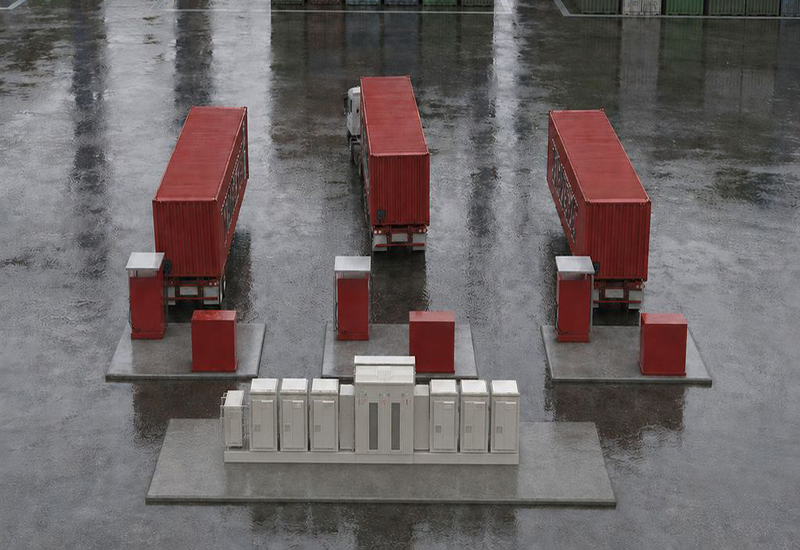

TMEIC Corporation Americas, a group company of TMEIC Corporation (Japan), announces the launch of its E-Tanker, a mobile charging solution designed to accelerate port decarbonisation through crane electrification without extensive infrastructure upgrades or operational disruption. The E-Tanker transitions rubber-tyred gantry (RTG) cranes from diesel to battery-electric power quickly and charges yard equipment, enabling terminals to significantly reduce diesel consumption and emissions while maintaining productivity and capacity.
Further content is only available for registered users.
“Diesel-powered RTG cranes can account for up to 75% of a terminal’s fuel consumption, making them a high-impact starting point for decarbonisation,” said Suraj Mishra, Business Development Manager, TMEIC. “While traditional cable reel and bus bar approaches clash with yard layout constraints and involve significant civil work and retrofit downtime, the E-Tanker solution introduces a new crane electrification paradigm. Terminals can transition to cleaner, battery-electric operations quickly and cost-effectively without redesigning their yards or taking cranes offline for weeks.”
The E-Tanker is a multi-component solution that includes a mobile lithium-ion battery charging unit, high-energy battery blocks and a charging station, all orchestrated by the company’s intelligent Fleet Management System (FMS).
Housed in a standard 40-foot container and transported by terminal tractors, the E-Tanker mobile charging unit integrates seamlessly into existing port operations. A single unit can serve multiple RTGs, providing a scalable and adaptable pathway toward broader electrification initiatives.
The solution’s compact, high-energy battery blocks can be easily adapted to existing cranes, offering a streamlined and cost-effective transition to electric-powered equipment. Integration with the companies’ FMS provides real-time visibility into yard operations, including battery state of charge, job assignments, charging schedules and operational priorities. This intelligence helps optimise utilisation of assets and maximise efficiency across the terminal.