


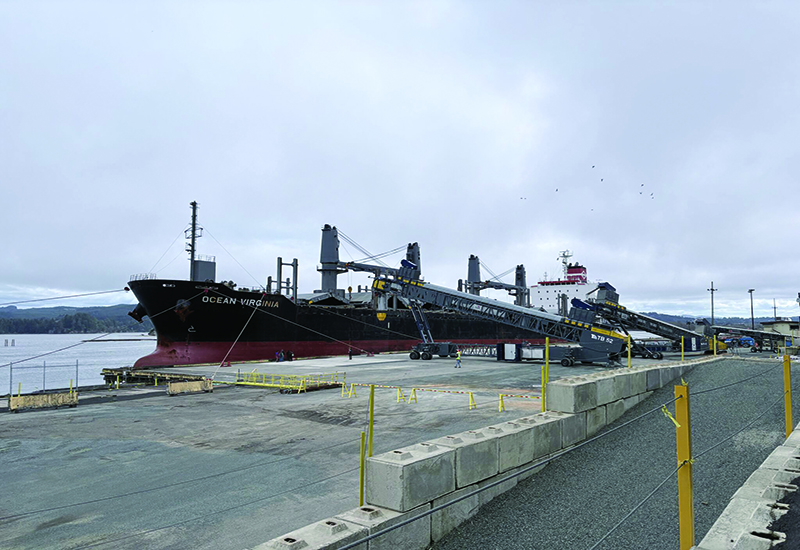

Telestack recently loaded a wood pellet vessel utilising ‘mobile and modular equipment’.
The team of Telestack ports and terminal material handling solution were delighted to see things in operation during a customer visit on the west coast of North America. This installation is purpose-built for high‑throughput wood pellet export, efficiently transferring material from landside handling through to vessel loading for international markets, this load was destined for Japan. This first vessel load was just under 29,000 tonnes, validating the system’s throughput, reliability, and suitability for large‑scale export terminals.
It is a strong example of how integrated mobile and modular solutions can deliver real customer value at the terminal: operational flexibility within tight berth constraints, reduced double handling, and a scalable platform to support long-term export growth.
Further content is only available for registered users.
As expected, whilst the team struggled in the first 20-odd hrs getting to grips with the equipment and managing the operational challenges with a ‘green team’, they actually surprised themselves in terms of the target vs actual load time given the intermittent rain and the operational challenges with the new team and equipment.
This equipment was rated for 800 t/h and the team were averaging around 750 t/h subject to how the various gates were being opened and closed to allow the tunnel reclaim conveyor to supply product to the ship-loading equipment.
The team started to load on a Sunday at 5pm after the draught survey was done and shut down the system on the following Wednesday night at 9pm. They had multiple stoppages for warping vessel, hatch changes, interim draught survey, some electrical trips, flooding of the belt, rain delays – normal operational challenges.
In terms of resources to load the actual vessels, the team worked 24 hr shifts and basically had two operators on the vessel deck managing the actual operation and one supervisor / shift.
On the ground, they had an inexperienced team that was finding their way and in the warehouse, there were two FEL operators working in 12 hr shifts. There was also a Telestack technician on site to support the OPM team.